Tracing Jackpot Mechanics Through Finnish Regulatory Shifts in Digital Slot Ecosystems
Kirjoittanut David Patterson · 27.10.2026
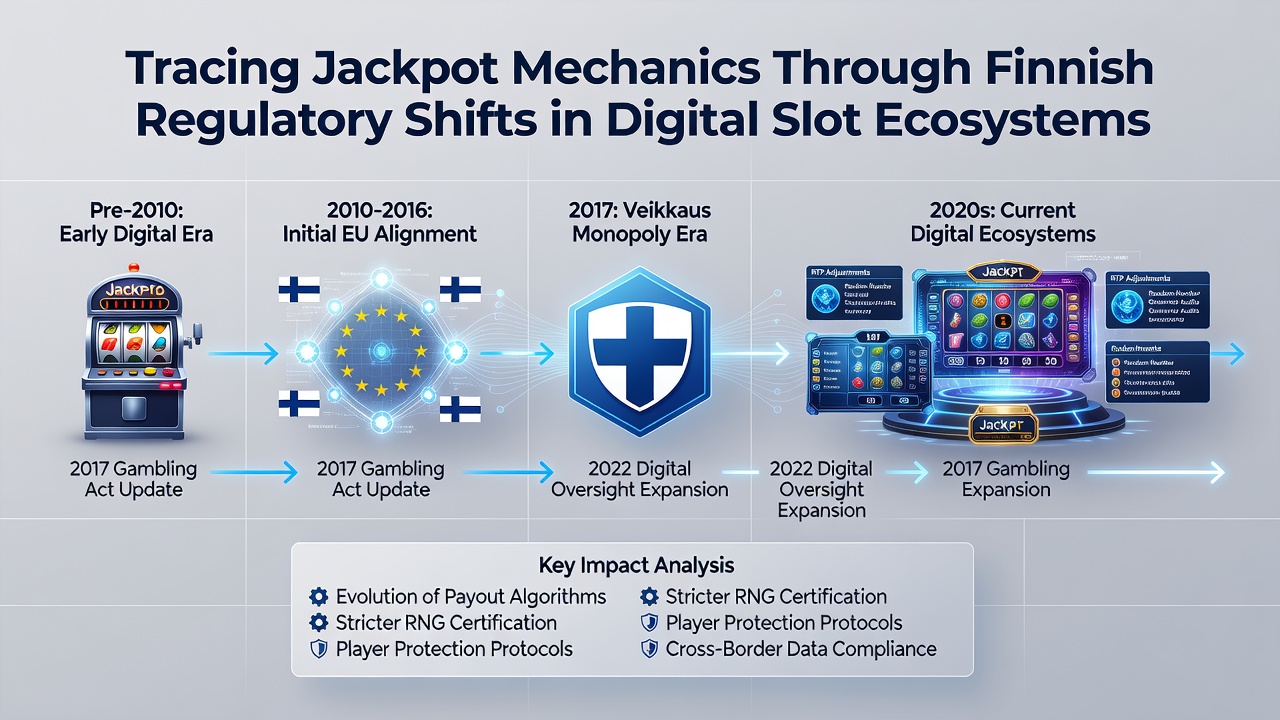
Tracing Jackpot Mechanics Through Finnish Regulatory Shifts in Digital Slot Ecosystems
Finland maintains a state monopoly on gambling through Veikkaus Oy, yet successive regulatory adjustments since the mid-2010s have altered how progressive jackpots accumulate and distribute in licensed digital slot environments. Those adjustments include tighter licensing criteria for third-party game providers, revised contribution caps on jackpot pools, and updated technical standards issued by the National Police Board. Observers tracking these changes note that jackpot mechanics now operate under stricter contribution percentages and payout verification protocols than were common before 2017.
Early Regulatory Framework and Initial Jackpot Designs
Before the 2017 merger that consolidated all gambling under Veikkaus, independent operators ran separate progressive networks where jackpot contributions often reached 5 percent of each wager. Data from that period shows multiple standalone pools exceeding €2 million within weeks of launch, while cross-site linkage remained minimal. The 2017 legislative package introduced mandatory reporting of jackpot seed values and required operators to maintain separate reserve accounts covering at least 120 percent of any advertised maximum payout. These requirements prompted providers to redesign accumulation algorithms so that daily contribution limits aligned with the new reserve thresholds.
Post-2020 Technical Standards and Pool Segmentation
Updated technical standards effective from January 2021 segmented jackpot pools into local, national, and international tiers, each governed by distinct contribution ceilings. Local pools now cap daily additions at €15,000 per game title, whereas national pools allow up to €75,000 provided Veikkaus verifies the underlying RNG integrity every quarter. International tier participation requires an additional compliance audit by an EU-recognized testing laboratory. Figures released by the Finnish Gambling Administration in mid-2026 indicate that 68 percent of active digital slots currently link only to local or national tiers, reflecting the added administrative cost of international certification.
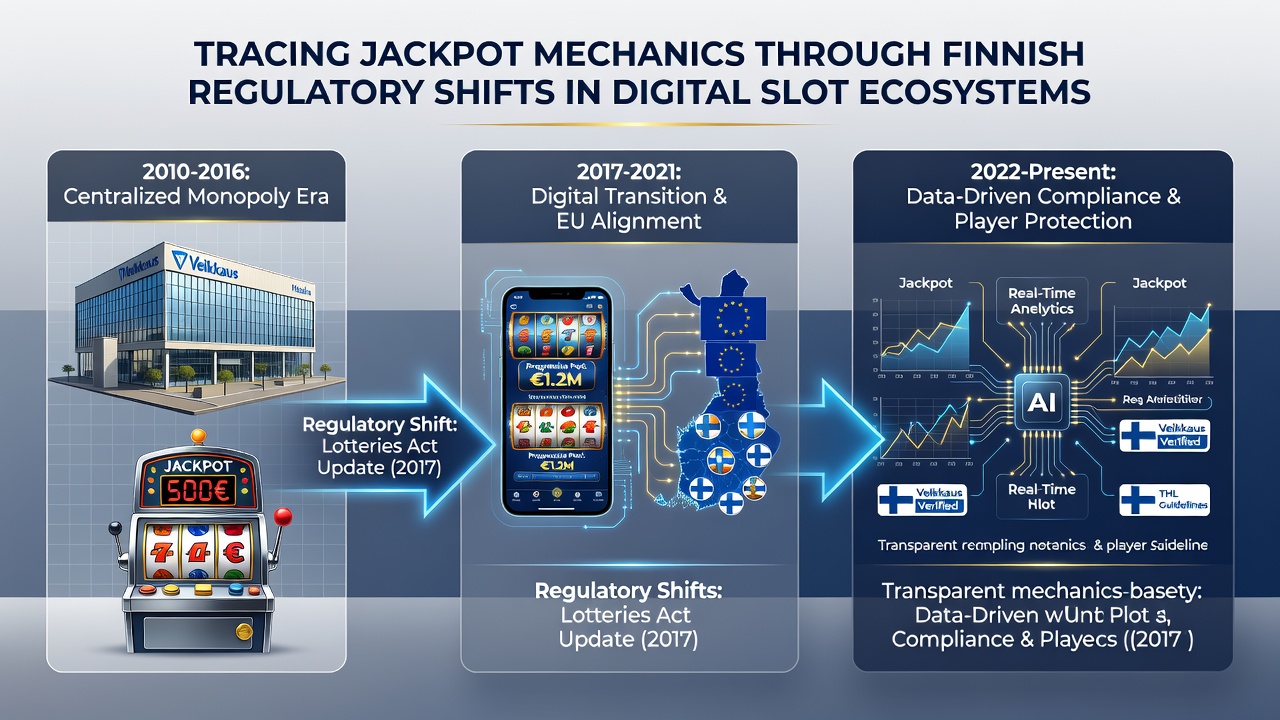
Payment flow regulations introduced in 2023 further refined how winnings transfer to player accounts. Operators must now route all jackpot disbursements above €50,000 through a central clearing system operated by the Bank of Finland, which performs automated anti-money-laundering checks before funds reach the recipient. This step added an average settlement delay of 14 hours compared with pre-2023 direct transfers, yet it also produced an auditable chain that links each jackpot trigger event to its originating wager sequence.
Impact on Game Provider Strategies in October 2026
By October 2026 most major game studios had adjusted their jackpot engines to accommodate Finland’s tiered contribution model. One documented change involved replacing continuous percentage-based contributions with a hybrid system that alternates between fixed euro increments and percentage slices, depending on current pool size. This hybrid approach keeps daily additions within the regulatory caps while preserving player perception of steady growth. Research published by the University of Tampere’s gambling studies unit shows that average time-to-jackpot for national-tier games lengthened by 22 percent between 2022 and 2025, a direct consequence of the segmented accumulation rules.
Another observable shift concerns seed funding. Earlier regulations permitted operators to seed new pools from marketing budgets; current rules require seed capital to come from a dedicated jackpot reserve that cannot be replenished from player losses. Consequently, several providers now launch new titles with smaller initial seeds and rely on rapid player volume to build momentum, rather than front-loading large guaranteed amounts.
Cross-Border Data Sharing and Verification Protocols
Finnish authorities participate in the Nordic-Baltic regulatory cooperation network, which exchanges anonymized jackpot-trigger data across member jurisdictions. The arrangement allows Finnish supervisors to compare payout frequency patterns against those recorded in Sweden and Denmark, identifying statistical anomalies that may indicate technical faults or manipulation attempts. In 2025 the network processed 1,847 jackpot events from Finnish-licensed games, none of which triggered further investigation after automated verification.
Technical audits conducted under the 2024 revision of the Lotteries Act now require third-party labs to test jackpot calculation modules separately from core RNG functions. Labs must demonstrate that the probability model produces the advertised return-to-player percentage even when the jackpot contribution component is isolated. This separation prevents operators from masking lower base-game returns behind inflated jackpot expectations.
Conclusion
Regulatory evolution in Finland has produced measurable changes in how digital slot jackpots accumulate, verify, and disburse. Tiered pool structures, reserve requirements, central clearing, and cross-border data exchange together define the current operational landscape. Providers continue to adapt their algorithms and funding mechanisms to remain compliant, while the National Police Board maintains ongoing oversight through quarterly technical reviews and annual financial audits. These documented adjustments illustrate a regulatory trajectory focused on transparency and risk containment rather than expansion of jackpot scale.